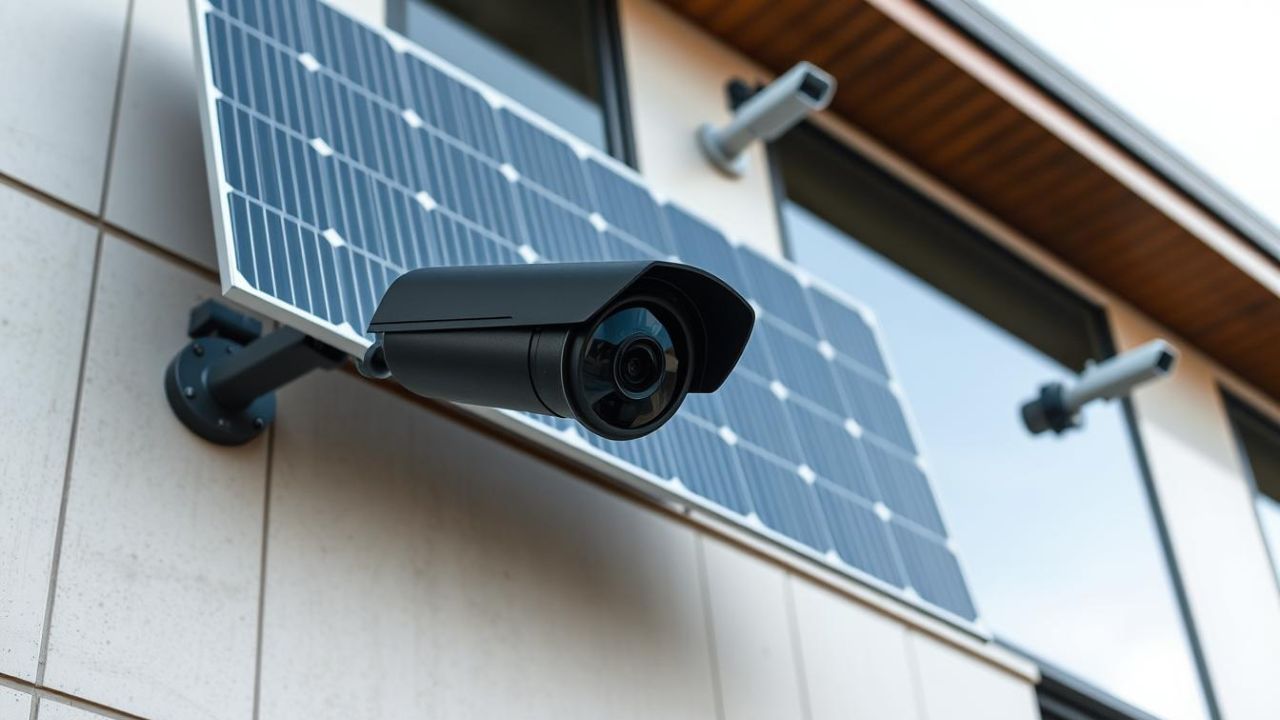
The security cameras that operate on solar energy have revolutionized the manner in which outdoor surveillance is implemented, as they are wire-free, operate continually on renewable energy, and the performance of the camera remains reliable in remote locations. With the development of this technology, one of the most important innovations today is an AI motion detector. These cameras can detect, interpret, and react to significant security events using a system of artificial intelligence with much more precision than traditional motion sensors. Knowing how AI has been applied to improve solar powered cctv security cameras makes the users realize the importance it adds to contemporary surveillance.
Understanding AI Motion Detection in Solar Cameras
AI motion detection is a technology that involves the use of sophisticated algorithms to determine various kinds of movement. In comparison to the normal PIR sensors that can sense any form of motion created by a source of heat, AI is able to recognize a particular object like a human being, a vehicle, an animal, or a package. This degree of intelligence is particularly useful with solar-powered systems, which are based on effective power management. With accurate motion event processing, AI makes sure that the camera is triggered unnecessarily and that camera energy is used efficiently. In the case of solar devices that can be powered by batteries, the reduction in false alarms has a direct impact on increasing the operating time and improving the condition of the battery.
Reducing False Alerts for More Reliable Monitoring
The large number of false alerts due to shadows, moving leaves, insects, or changing weather is one of the greatest challenges of the traditional motion-detecting methods. AI motion detection addresses this issue by examining the form, conduct, and magnitude of objects, and after that, an alarm is raised. Users will only get what they need when a solar-powered CCTV camera can distinguish between an on-passing car and a moving branch of the tree. This goes a long way in enhancing the confidence one has in the system since one is not bombarded with unnecessary warning messages. In off-grid or remote systems, precise detection is particularly essential since it minimizes unnecessary energy consumption, network, and storage.
Enhancing Security with Object-Specific Recognition
AI also adds object-specific detection to solar-powered CCTV cameras, allowing them to recognize individuals in categories, like human beings, vehicles, and animals. This will enable users to tailor their surveillance to their actual security requirements. As an illustration, a homeowner might desire alerts whenever somebody gets close to the entrance, and a farm owner might require the system to give an alert whenever a vehicle enters the premises. Such personalization is achievable because of AI filtering, which will make sure that only valuable things are brought to attention. The attention paid to the critical types of motion makes AI improve the overall efficiency of the solar-powered surveillance systems.
Improving Real-Time Response and Threat Prevention
Live alerts are a crucial part of modern security, and AI motion detection reinforces this operation. Once a potential threat is identified by a solar-powered CCTV camera, the system will issue an immediate alert on the mobile device of the user. In the case of AI, the alert is also complete with vivid information regarding the cause that triggered the alert, and therefore, the user will be able to react more quickly. Two-way audio, spotlight activation, or sirens are some of the features of many solar cameras. When AI correctly detects a suspicious activity, the user can instantly turn on these features, frightening insurgents or speaking directly. This AI monitoring, along with a real-time reply, boosts the intensity of proactive safeguarding these cameras have.
Optimizing Storage and Bandwidth Usage
Since the solar-powered cameras are usually equipped with cloud or SD card storage, space management is important. AI can also eliminate redundant recordings by maintaining only the clips that were caused by significant motion events. It will increase the flexibility of the storage capacity and enhance the ease of navigation in playback to allow searching the relevant records more easily without having to sort through hours of irrelevant content. Another feature of AI-based event tagging that enhances the user experience is the ability to quickly select a certain type of detection, including human or vehicle movements. In the case of cameras that have 4G LTE connectivity, it is also possible to reduce unnecessary data transmission that contributes to decreasing bandwidth consumption.
Conclusion
The motion detection by AI can greatly improve the performance and reliability of solar-powered CCTV security cameras. AI is turning such systems into powerful, smart security tools by means of false alert reduction, more accurate alerts, optimization of energy and storage consumption, and more rapid real-time response. With the continued improvement in the field of solar and AI technology, the integration of the two will become a significant part of what becomes the most sustainable, efficient, and highly effective outdoor surveillance system, both in homes, businesses, and remote settings.